Creating an Effective Content Strategy for Your Website
Creating an Effective Content Strategy for Your Website
An effective content strategy helps you publish the right things, for the right people, at the right time. It is not just “posting more.” It is a simple plan that connects your audience’s needs with your business goals.
What a content strategy means
Content strategy is the plan for what you publish, why you publish it, who it is for, and how you will know whether it helped. It covers the message, the format, the timing, and the review process.
If that sounds like a lot, take a breath. It really comes down to a few steady questions:
- Who are we trying to help?
- What do they need to know?
- What action do we want them to take?
- How will we measure whether the content worked?
Understanding your audience
Before you write anything, get clear on who you are writing for. Audience research helps you avoid content that sounds polished but misses the mark.
Audience means the group of people you want to reach, such as first-time buyers, repeat customers, local prospects, or people comparing services. A small business website does not need to speak to everyone. That usually ends badly and reads like it was written by committee.
Practical ways to learn about your audience
- Identify target demographics: age range, location, role, industry, or buying stage.
- Conduct surveys or interviews: ask what they are trying to solve and what confuses them.
- Review site data: look at pages with high exits, strong engagement, or frequent searches.
Example: If you run a service business, your audience may want pricing guidance, examples of your work, and a simple way to contact you. A long history lesson may be charming, but it will not answer the question they came to solve.
For help understanding what readers actually do on your site, tools like Google Analytics and Google’s helpful content guidance can be a good starting point.
Setting goals for content
Once you know your audience, decide what success looks like. A goal gives your content direction. Without one, you end up with a lot of words and very little progress. Word count is not a strategy, no matter how hard it tries.
Goal means a specific outcome you want content to support. That might be more contact form submissions, more qualified leads, more newsletter signups, or better support for existing customers.
Use SMART goals
- Specific: Name the outcome clearly.
- Measurable: Choose a number or clear signal.
- Achievable: Keep it realistic for your team.
- Relevant: Tie it to a business need.
- Time-bound: Set a deadline.
Example: Instead of saying “get more traffic,” try “increase visits to our service pages by 20% in the next quarter.” That is much easier to plan for and review.
For a broader view of search behavior, Semrush’s content strategy guide and Moz’s beginner SEO guide explain how goals and search intent fit together.
Types of content to include
Different content types do different jobs. A good strategy uses a mix, not because variety is trendy, but because people need different things at different stages.
| Content type | Best for | Simple example |
|---|---|---|
| Blog posts | Education and search visibility | “How to choose the right website layout for a service business” |
| Videos | Showing a process or building trust | A short walkthrough of your onboarding steps |
| Infographics | Breaking down a process or comparison | A visual summary of your service timeline |
| Social media posts | Short updates and distribution | A new blog post teaser with one useful takeaway |
| E-books | Deeper education and lead capture | A downloadable guide to planning a website launch |
Practical step: Map each content type to a purpose. If a post will not educate, support, convert, or reassure, it may be decorative. Decorative content is lovely in a vase, less useful in a content plan.
Measuring content effectiveness
Good content should be reviewed, not just published and admired from afar. Measuring results tells you what to keep, what to improve, and what to stop doing.
Effectiveness means how well the content supports your goal. That might be clicks, time on page, form fills, shares, or helpful feedback from readers.
What to track
- Analytics data: page views, engagement, and conversions.
- KPI progress: whether key performance indicators are moving in the right direction.
- Reader feedback: questions, comments, sales calls, and support requests.
Example: If a blog post brings traffic but no one clicks your contact link, the topic may be interesting but not action-oriented enough. You may need a clearer call to action, a better internal link, or a more relevant topic.
For practical measurement basics, HubSpot’s content planning resources and Google Analytics event guidance can help you define and track the right signals.
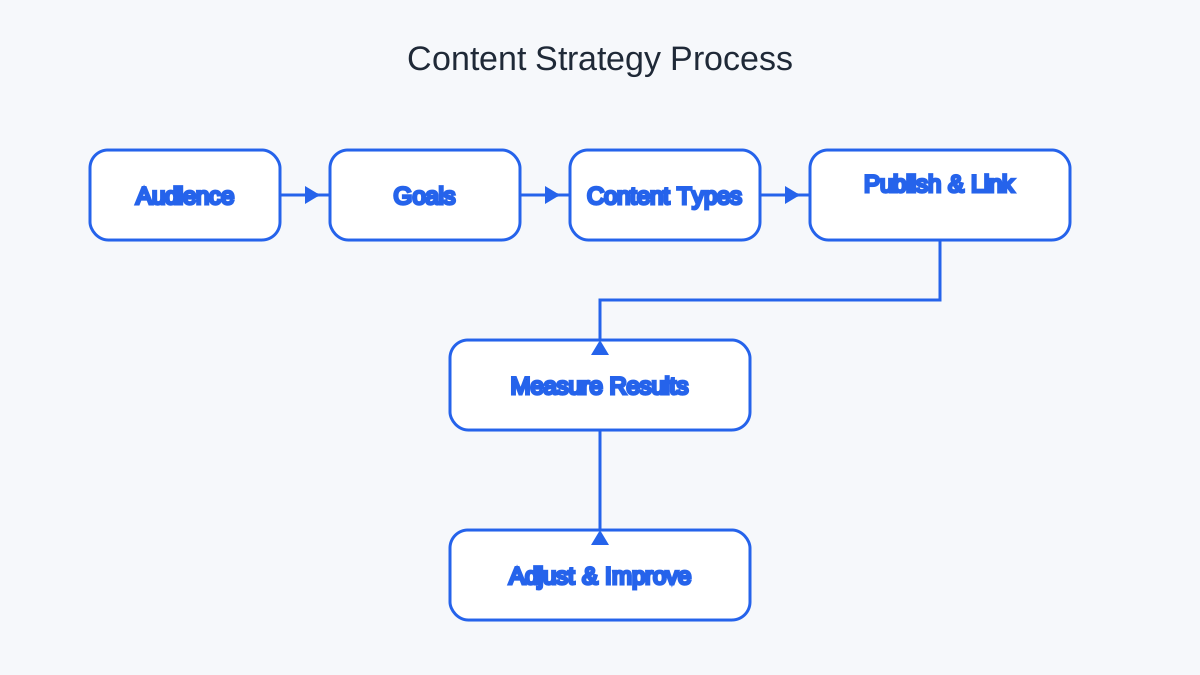
A simple content strategy workflow
- Understand your audience.
- Set one clear goal for the content.
- Choose the content type that fits the goal.
- Publish with a clear internal link and call to action.
- Measure the result and adjust.
That sequence is the whole trick. Not easy, exactly, but manageable. And manageable is where good work starts.
Conclusion
An effective content strategy helps you publish with purpose. When you understand your audience, set clear goals, choose the right formats, and measure results, your website content becomes much more useful to both visitors and your business.
If you want more practical website guidance, browse the blog for related articles or contact us to talk through a content plan that fits your site.